
Calm homeownership
The Hardest Part of Owning a Home Isn’t the Repairs
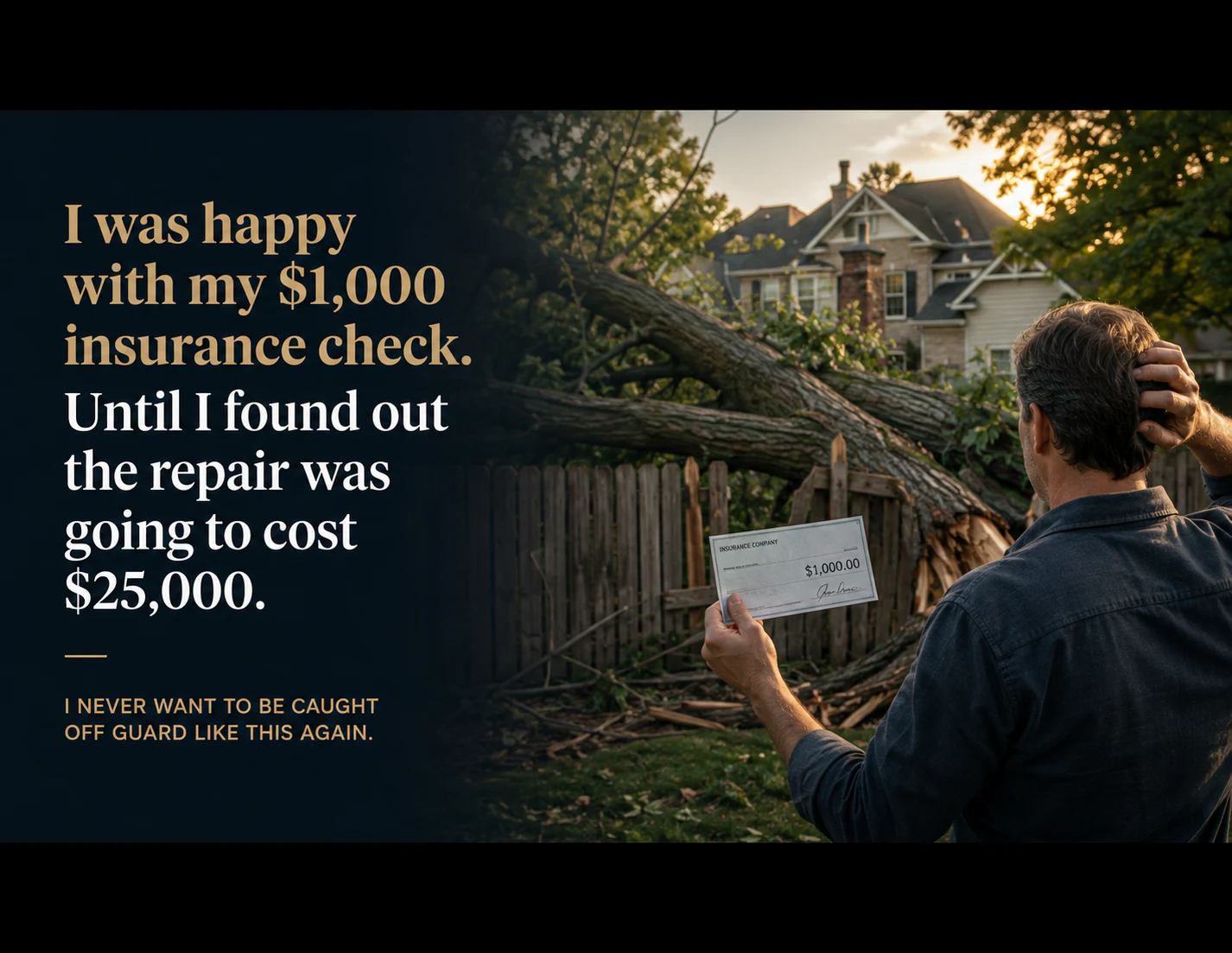
A $1,000 insurance check felt like good news until the first fence estimate came back at $25,000. This is why homeowners need reliable context before making expensive decisions about their homes.
I used to think the hardest part of owning a home would be paying for it.
I was wrong.
The mortgage eventually becomes another bill. You learn to budget for it. What nobody prepares you for is everything that comes afterward.
Owning a home is a lot like raising children. You’re never done. There isn’t a finish line where someone shakes your hand and says, “Congratulations. Your house is complete.”
Because everything you care about needs a little… or a lot… of attention, forever.
The strange part isn’t the maintenance. It’s what homeownership quietly expects of us.
One weekend you’re learning about water heaters. The next you’re trying to understand roofing. Then you’re comparing fence contractors. Before long, you’ve become an amateur plumber, electrician, appliance technician, insurance adjuster, landscaper, and warranty specialist. Not because you wanted to, but because life kept handing you problems you’d never seen before.
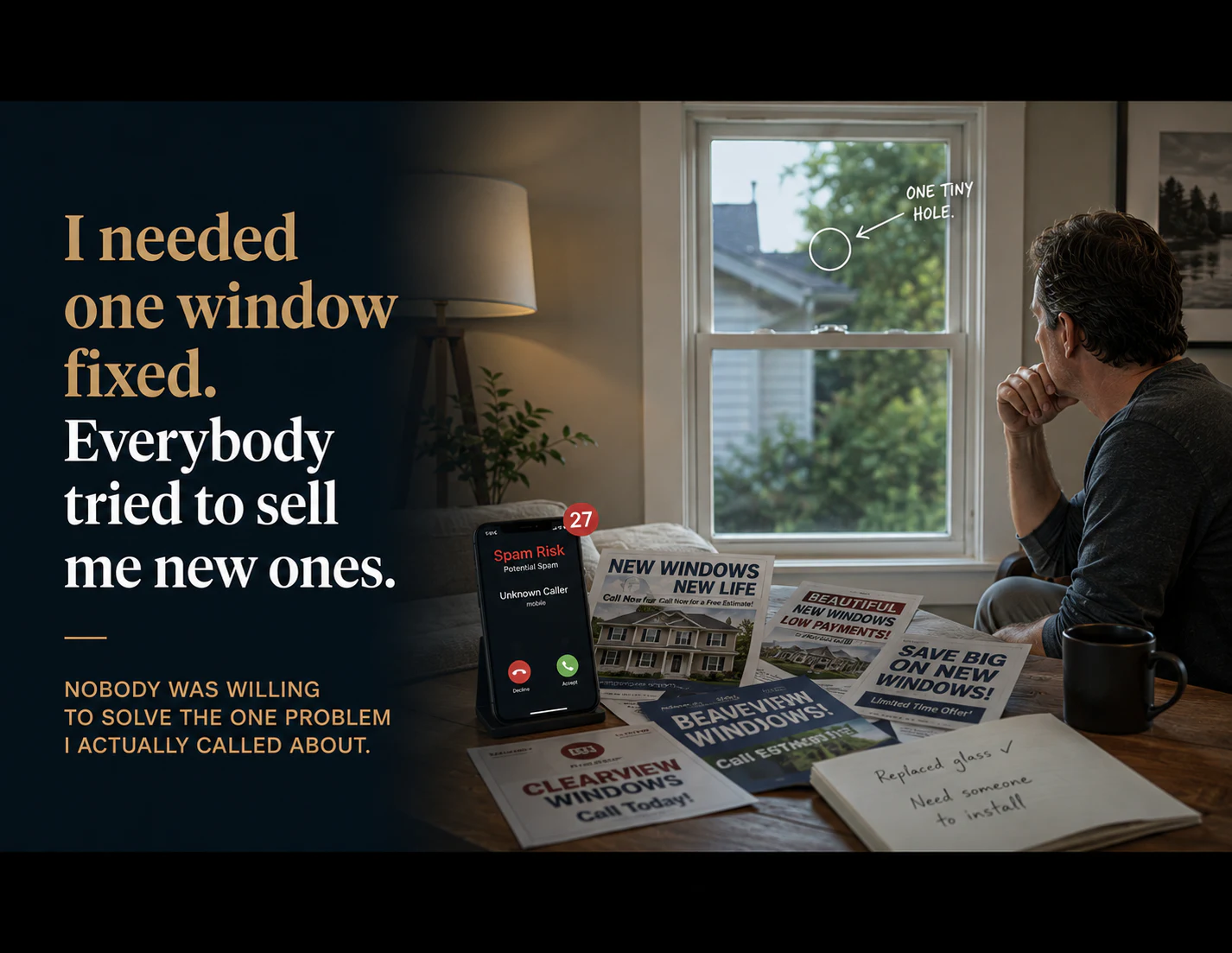
A few years ago, I noticed a tiny hole in one pane of one double-pane window. One little piece of glass. I figured it would take one phone call.
Instead, I entered an entirely different world.
The first company wasn’t interested. Then the robocalls started. I got what felt like a million unsolicited phone calls. Everybody wanted to sell me new windows. Nobody was willing to solve the one problem I had actually called about.
I even bought the replacement glass myself, but it sat in my garage because I wasn’t confident enough to take the window apart, and I couldn’t find anyone willing to finish the job.
Eventually we moved, and that little hole became somebody else’s problem.
For years I thought that story was about a window.
It wasn’t.
Two weekends ago, a tree damaged part of my fence.
I called my insurance company. They came out, looked everything over, and mailed me a check for about a thousand dollars.
Perfect.
Let’s get this fixed.
Maybe I can even find someone who’ll do it a little cheaper and save some of the money for whatever decides to break next.
Then the first estimate came back.
Twenty-five thousand dollars.
I just stared at it.
I had a thousand-dollar insurance check in my hand for what appeared to be a twenty-five-thousand-dollar problem.
I wasn’t shocked because I knew the estimate was wrong.
I wasn’t relieved because I knew it was fair.
I was completely caught off guard because I had absolutely no point of reference.
Looking back, I probably shouldn’t have asked anyone to come out yet. If I’d had even a basic understanding of what I was dealing with, I would have started putting money aside and called the contractor back when I was actually ready.
And that’s when something finally clicked.
I didn’t need another contractor.
I needed understanding.
Not certainty.
Not perfection.
Not an exact quote down to the penny.
Just the right amount of information to know what world I was living in.
Is this probably a five-thousand-dollar problem or a twenty-five-thousand-dollar problem?
Can this wait six months?
Should I fix it this year?
Or do I have to sell one of my kidneys just to pay for this thing?
What are my options?
Those answers change everything.
Not because the repair becomes cheaper.
Because the uncertainty becomes smaller.
I’ve worked around the home improvement industry long enough to know a little more than the average homeowner. Even so, I’ll never be an expert in roofing, plumbing, electrical work, HVAC, foundations, windows, insurance, warranties, landscaping, and everything else that goes into owning a home.
Nobody can.
That’s the point.
Homeownership doesn’t require us to know everything.
It just requires us to know enough to make a good decision.

I think millions of homeowners are carrying around the same unanswered questions I was.
We know the bathroom floor feels soft.
We know the dishwasher is acting up.
We know the deck probably needs attention.
We know the fence isn’t getting any younger.
What we don’t know is what any of it actually means.
So we wait.
Not because we’re irresponsible.
Because most home decisions cost money. And without a point of reference, the price you imagine can become a bigger obstacle than the repair itself.
Many times I’m not stopped by the actual cost of a repair.
I’m stopped by what I imagine it might cost.
Those are two very different things.
The wealthiest homeowners usually have someone they can call before a problem becomes an emergency. A trusted contractor. A property manager. Someone who helps them understand what’s happening before they have to decide what to do.
Most of us don’t have that.
We guess.
We procrastinate.
Or we imagine the worst.
So how do we fix this?
Not by expecting homeowners to become experts.
By giving them the right amount of information, exactly when they need it, to confidently decide what their next step should be.
Maybe it’s something they can fix themselves.
Maybe it’s something that can wait while they save for it.
Maybe it’s time to call a contractor.
Or maybe they’d rather have Potomac Lux coordinate the entire process for them.
The point isn’t to make the decision for you.
The point is to make sure you’re making it from a position of understanding instead of uncertainty.
With no information, you’re guessing.
With too much information, it’s easy to fall into decision paralysis.
As homeowners, we deserve something better.
We deserve to make decisions about our homes from a place of understanding.
We deserve the confidence that comes from understanding what we’re looking at, knowing our options, and making the decision that’s right for our family, our home, and our situation.
Because it’s only through understanding that we can truly move forward with confidence.

After reading this article,
ask yourself one question:
If something important happened in your home tomorrow, would you know exactly where to find the history?
Start building your home’s memory today.
Start Your Home Memory →Free to start. No downloads needed. No pressure. No pushy sales. Ever.
Continue Exploring
Related reading for the same homeownership context.
Calm homeownership
When Something Feels Wrong With Your Home: A Calm Guide to Making the Right Decision
Most homeowners don't panic because something broke. They panic because they don't know what it means. Learn how calm decision-making, continuity, and context can reduce the mental load of homeownership.
Home Memory
You’re About to Buy a Million-Dollar Home. I Hope Your Inspector Finds Every Issue in Two Hours or Less.
A home may hold decades of repairs, recurring problems, and hidden history. Yet buyers often receive only a brief visual inspection before making a million-dollar decision.
Home Memory
Why Haven't Homes Had a Memory?
A Potomac Lux Journal essay on why homes still lose their history, what disappears between homeowners, and why a house should be able to remember.
Home stewardship
The Lost Art of Stewardship
A reflection on why modern homeownership needs more than alerts, dashboards, and maintenance reminders. It needs stewardship, continuity, context, and calm human judgment.