The home stays whole
A roof issue, drainage concern, HVAC question, and renovation decision may be connected. Potomac Lux helps preserve the broader picture.
Why Potomac Lux exists
A home may contain decades of repairs, upgrades, lessons, and decisions. Most of that information disappears. Potomac Lux helps homeowners organize what matters and know what to do next.

The missing layer
A home has roofers, HVAC technicians, electricians, plumbers, landscapers, designers, contractors, and inspectors. Each specialist may understand one part of the home. Almost no one is responsible for helping the homeowner keep the full picture organized over time.
What gets lost
Every visit creates context. A recommendation, a photo, a material choice, a repair, a warning, a decision, a reason something was deferred. Without one place to keep it, that context leaves as quickly as it arrived.
Potomac Lux does not replace specialists. It helps the homeowner understand the whole picture.
The company exists to make home decisions clearer by organizing the details that usually get scattered between the homeowner, the home, and the many people who touch that home over time.
A familiar model
Potomac Lux serves a similar role for the home. It does not replace contractors. It does not replace inspectors, technicians, or designers. It helps homeowners preserve context, understand patterns, and coordinate the right specialist when deeper expertise is needed.
A roof issue, drainage concern, HVAC question, and renovation decision may be connected. Potomac Lux helps preserve the broader picture.
Specialists do the work they are trained to do. Potomac Lux helps the homeowner prepare, interpret, and coordinate with clearer context.
The homeowner remains the decision maker. Potomac Lux provides organization, planning, and guidance.
Local-first
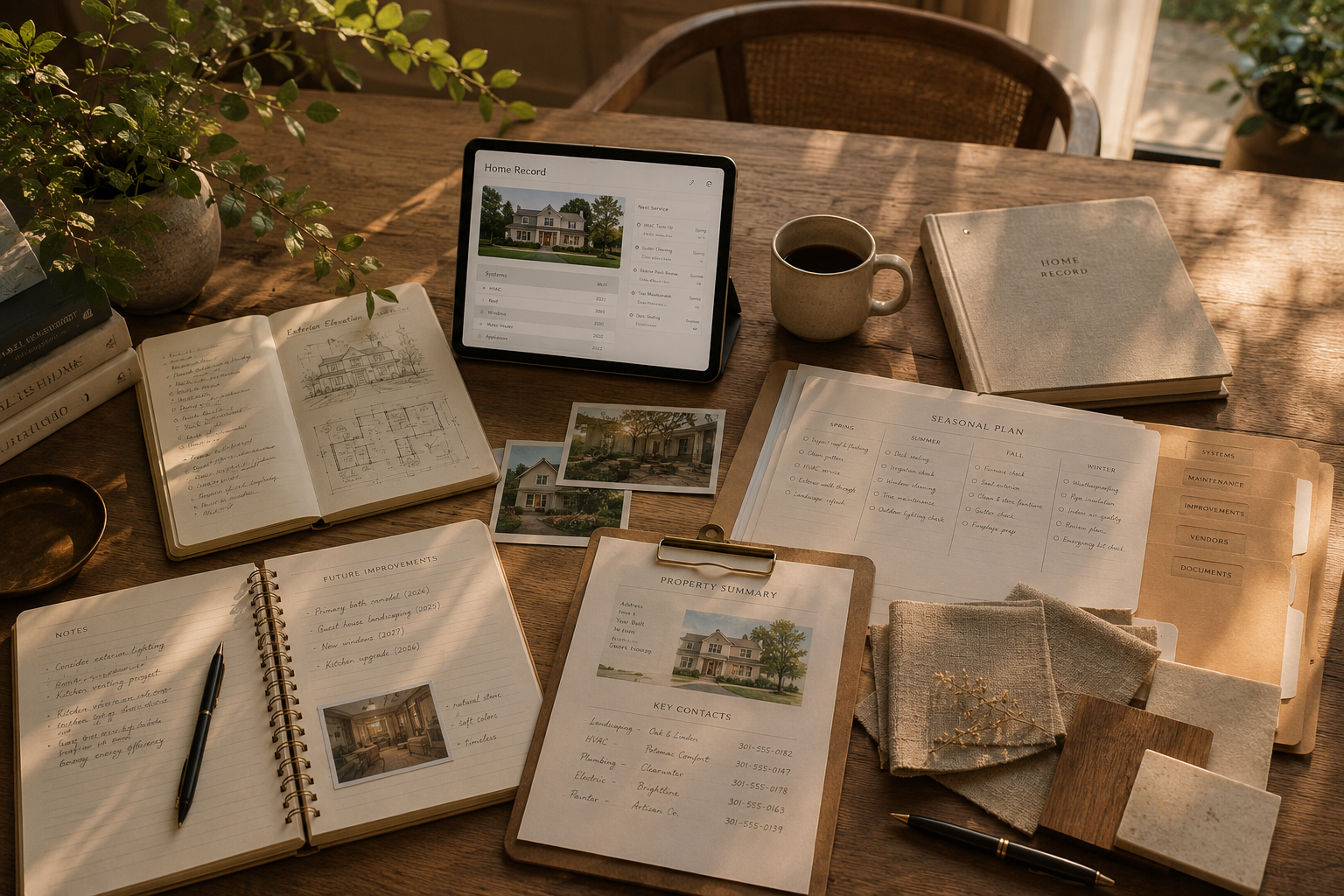
Across the DMV, families move into homes with decades of repairs, upgrades, contractor visits, weather, materials, owner decisions, and unfinished questions already behind them.
The house may be stable, loved, and well cared for. But the knowledge around it is often fragmented or gone.
Potomac Lux was built to help bridge that gap: to help homeowners understand what they own, preserve what matters, and make future decisions with more context.
Founder witness
The founder story matters only because it reveals the pattern. Rafael watched homeowners repeatedly start over: explaining the same house again, searching for the same records again, weighing advice without the full history, and losing useful context every time a project or service visit ended.
A detail might matter during a visit, then vanish into a text thread, invoice, phone photo, or passing conversation.
Each new specialist often entered without the story that would make the next recommendation easier to judge.
The need was not another contractor. The need was a trusted way to organize what mattered and carry useful context forward.
The philosophy
The better the record, the easier those decisions become. Potomac Lux helps keep the useful details organized so homeowners can act with more confidence.
The goal is not to make homeowners anxious about every detail. The goal is to make the home easier to understand so uncertainty becomes lighter.
Before a home can be managed well, the important facts need somewhere practical to live.
Potomac Lux is not built to push projects. It is built to support calmer judgment over time.
The long view
Potomac Lux is working toward a calmer form of homeownership: one where knowledge stays organized, families inherit useful context, and decisions begin with a clearer understanding of the home.
Founding Homes
Founding Homes get early access to the Home Record and help shape a simpler way for homeowners to stay organized and know what to do next.