
Calm homeownership
The 300,000-Year-Old Problem Hiding in Your Walls
A calm Potomac Lux Journal essay on why homeowners worry less about repairs themselves than the uncertainty behind them, and why preserved home history creates peace of mind.
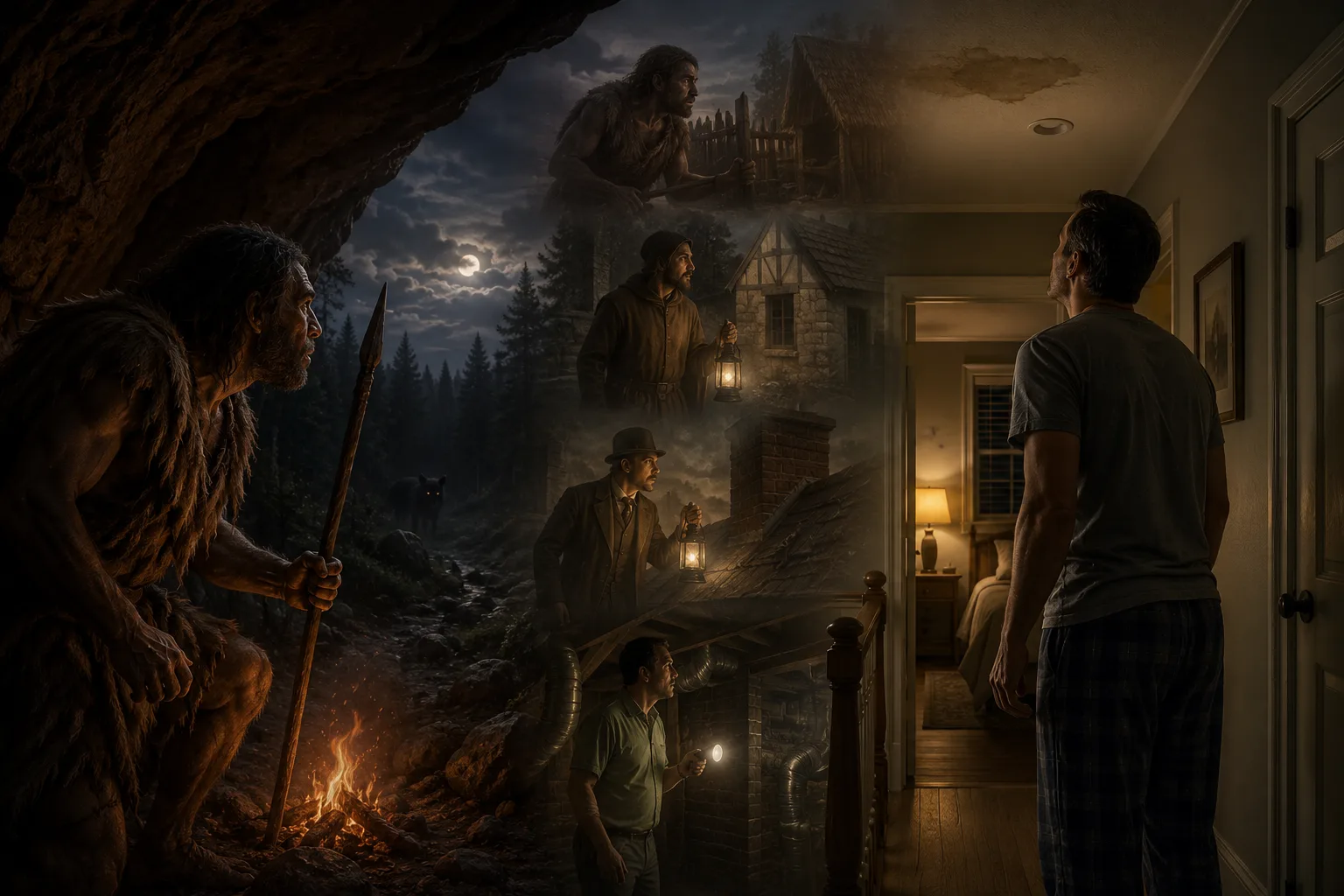
At 2:13 in the morning, a homeowner hears a sound.
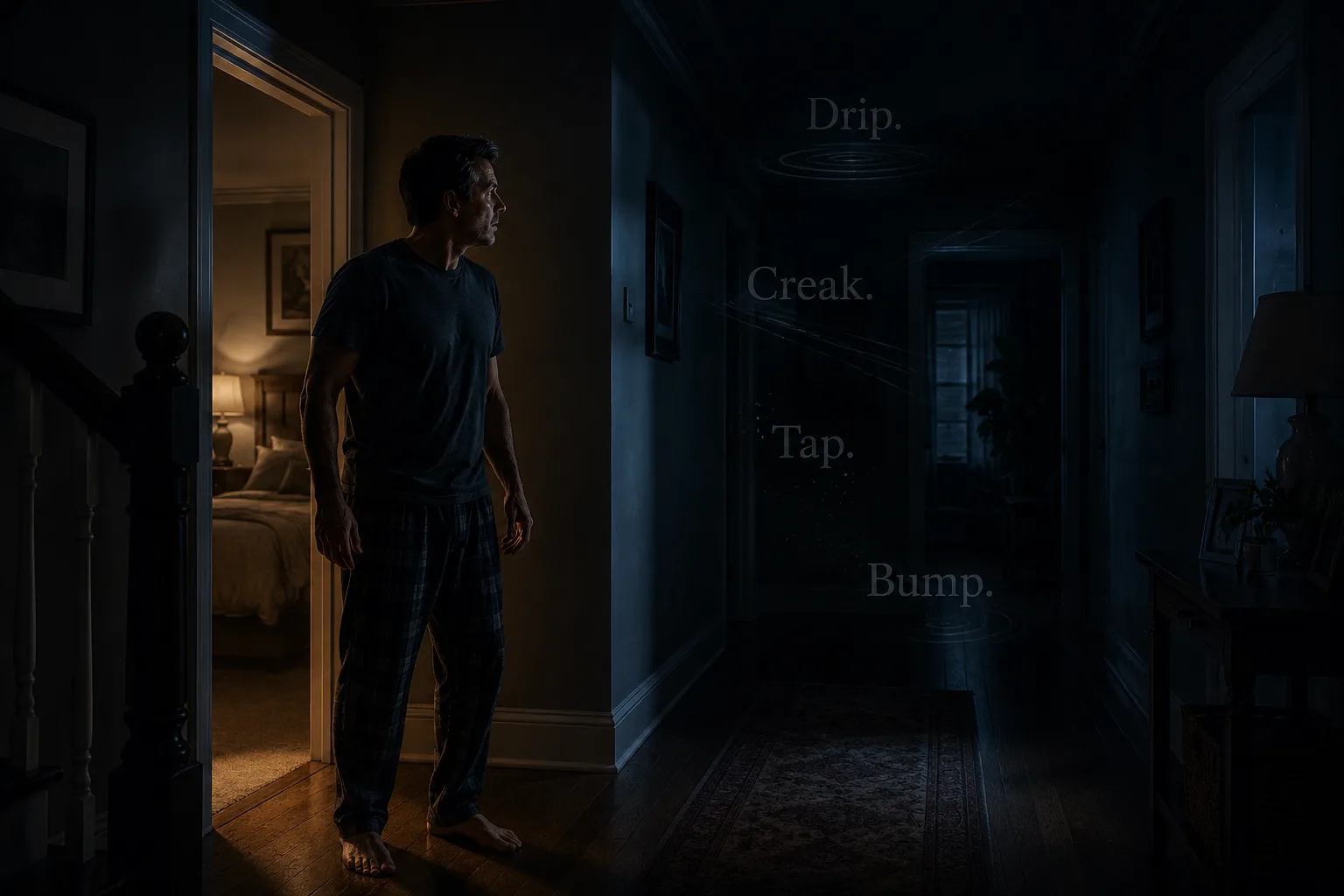
A drip.
Not loud.
Not urgent.
Just unusual.
Now they’re awake.
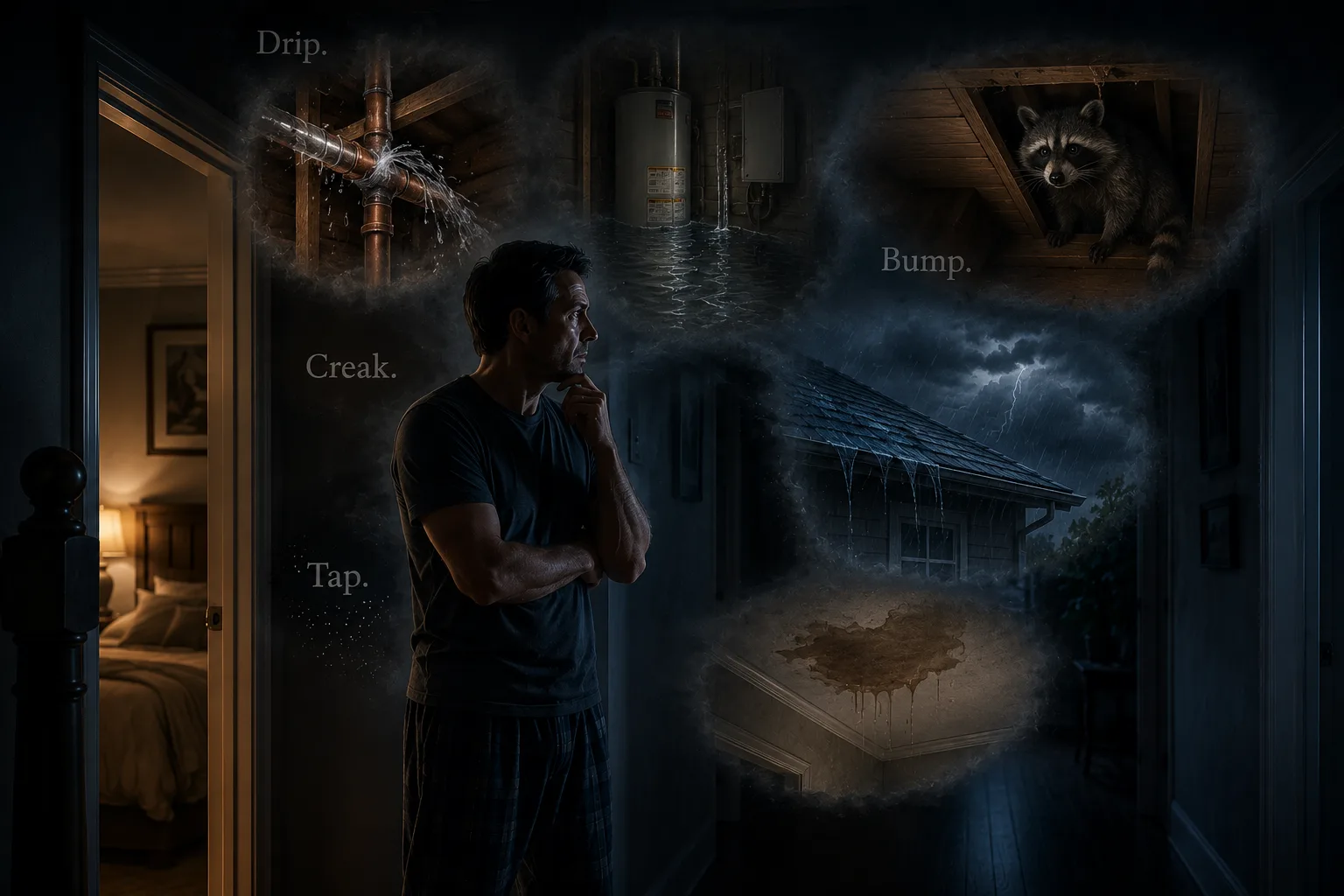
Was that always there?
Did something break?
Is water leaking somewhere?
Will this be a $20 fix?
Or a $20,000 one?
The sound itself isn’t what keeps them awake.
The uncertainty does.
For roughly 300,000 years, human beings have faced the same challenge.
A rustle in the bushes.
What could it be?
Now you have to decide what to do next.
Ignore it?
Investigate it?
Run?
The biological pressure pushing us to pay attention was enormous.
And for good reason.
If you worried about danger a thousand times and only one of those dangers was real, you were still alive.
If you ignored danger a hundred times and were wrong once, your story might end there.
Evolution doesn’t reward comfort.
It rewards survival.
So over thousands of generations, our species became very good at noticing uncertainty.
Very good at imagining possible futures.
Very good at asking:
What if?
That system helped our ancestors survive.
It’s still running today.
Only now the rustle in the bushes has become a stain on the ceiling.
A crack in the drywall.
A strange smell in the basement.
A noise in the attic.
A drip at 2:13 in the morning.
Homeowners Worry About The Unknown
Most homeowners think they worry about repairs.
They don’t.
They worry about uncertainty.
A leak is stressful.
But not nearly as stressful as not knowing where it came from.
A crack in the wall is unsettling.
But not as unsettling as wondering whether it appeared yesterday or has been growing for ten years.
The challenge isn’t the problem.
The challenge is the unknown.
And homes are full of unknowns.
When was that water heater installed?
Has this happened before?
Who repaired this last time?
Where is the paperwork?
Who knows the history?
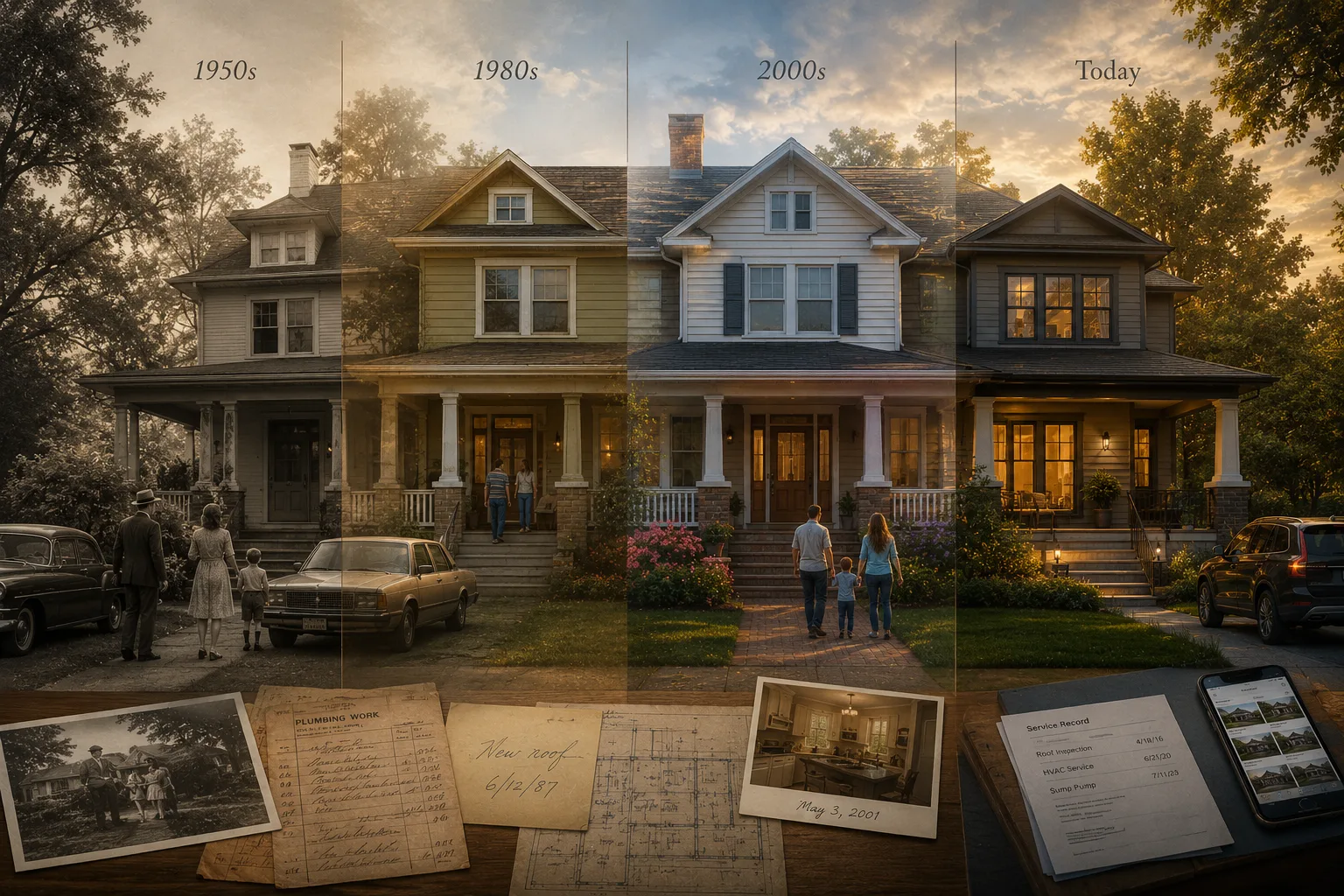
Over time, those answers tend to disappear.
Receipts get lost.
Contractors retire.
Homeowners move.
Memories fade.
The house remains.
The context doesn’t.
In a strange way, homes lose their memory.
And when memory disappears, uncertainty grows.
Suddenly it feels like we’re right back in that dark primordial forest, trying to make an important decision with incomplete information.
Potomac Lux was born from a simple observation:
Homeowners spend an enormous amount of energy dealing with uncertainty.
Not just repairs.
Uncertainty.
What happened?
What was done?
Who did it?
What should happen next?
The goal isn’t to eliminate every problem.
That’s impossible.
The goal is to preserve context.
To remember what was done, when it was done, and why it mattered.
To turn unknowns into knowns whenever possible.
Because peace of mind isn’t the absence of problems.
It’s confidence that you understand them.
That is why home history matters, why calm decisions begin with context, and why stewardship is a better frame for homeownership than simply reacting to the next repair. If the earlier history is already missing, start with this practical guide to finding a house’s repair and renovation history.
The sound that wakes a homeowner at 2:13 in the morning is rarely the real problem.
The real problem is not knowing what the sound means.
For 300,000 years, human beings have been trying to solve that problem.
The setting has changed.
The challenge has not.
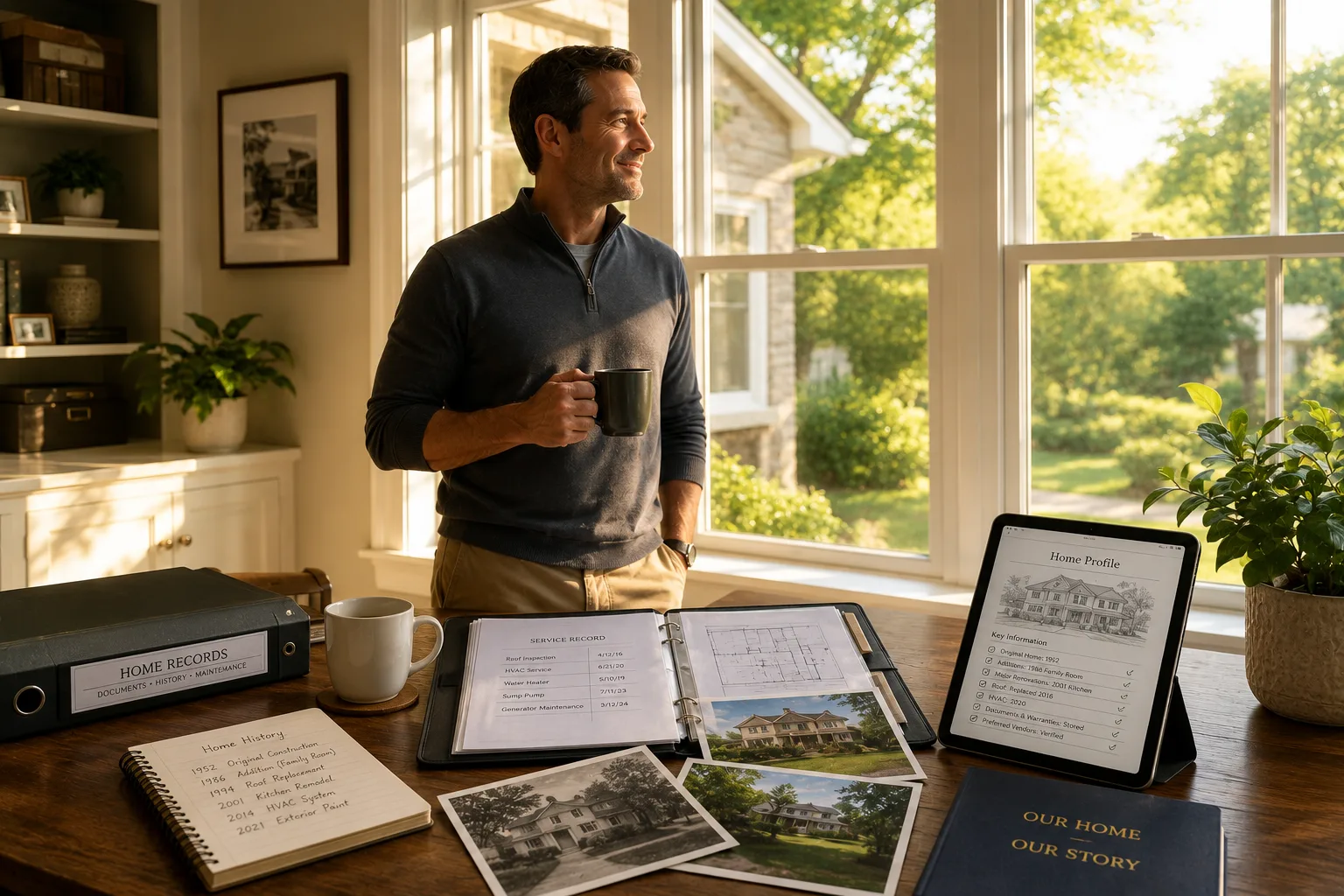
The Light We Can Leave On
Today, we have an opportunity our ancestors never had.
To leave a light on.
To preserve what we’ve learned.
To leave behind context instead of confusion.
So that whoever stands in this little clearing in the woods we call home doesn’t have to start from zero.
Your home has always been telling you something. Potomac Lux helps you understand it.
Frequently Asked Questions
What causes homeowners the most stress?
Homeowners are often most stressed by uncertainty. A repair can be frustrating, but not knowing what happened, how serious it is, who to call, or whether it has happened before creates a much heavier mental load.
Why do homeowners worry about uncertainty?
Human beings are wired to notice possible threats and imagine what might happen next. That instinct helped people survive for thousands of generations. In modern homes, it often shows up as worry about strange sounds, stains, smells, cracks, and missing context.
Why is home history important?
Home history helps homeowners understand what has happened before, what was repaired, who did the work, and what may need attention next. Good history turns repeat confusion into useful context.
How do homes lose their memory?
Homes lose memory when receipts disappear, contractors retire, owners move, emails get buried, photos are scattered, and repairs are not documented. The physical home remains, but the context around it fades.
What information should homeowners preserve?
Homeowners should preserve repair records, photos, installation dates, warranties, contractor notes, inspection findings, service history, and decisions made about major systems, structures, and recurring concerns.
After reading this article,
ask yourself one question:
If something important happened in your home tomorrow, would you know exactly where to find the history?
Start building your home’s memory today.
START YOUR HOME RECORD →Free to use. Paid projects and hands-on services are priced separately.
Continue Exploring
Related reading for the same homeownership context.
Home stewardship
Why Your Home Keeps Losing Its Memory
A Potomac Lux Journal essay on fragmented household knowledge, operational continuity, and the hidden exhaustion of rebuilding context from scratch.
Calm homeownership
When Something Feels Wrong With Your Home: A Calm Guide to Making the Right Decision
Most homeowners don't panic because something broke. They panic because they don't know what it means. Learn how calm decision-making, continuity, and context can reduce the mental load of homeownership.
Home stewardship
The Lost Art of Stewardship
A reflection on why modern homeownership needs more than alerts, dashboards, and maintenance reminders. It needs stewardship, continuity, context, and calm human judgment.
Calm homeownership
The Future of Homeownership Should Feel Calmer, Not More Complicated
The future of homeownership is not more apps, alerts, dashboards, or homeowner burden. It is calmer stewardship supported by memory, continuity, guidance, and thoughtful coordination.