
Calm homeownership
The Future of Homeownership Should Feel Calmer, Not More Complicated
The future of homeownership is not more apps, alerts, dashboards, or homeowner burden. It is calmer stewardship supported by memory, continuity, guidance, and thoughtful coordination.
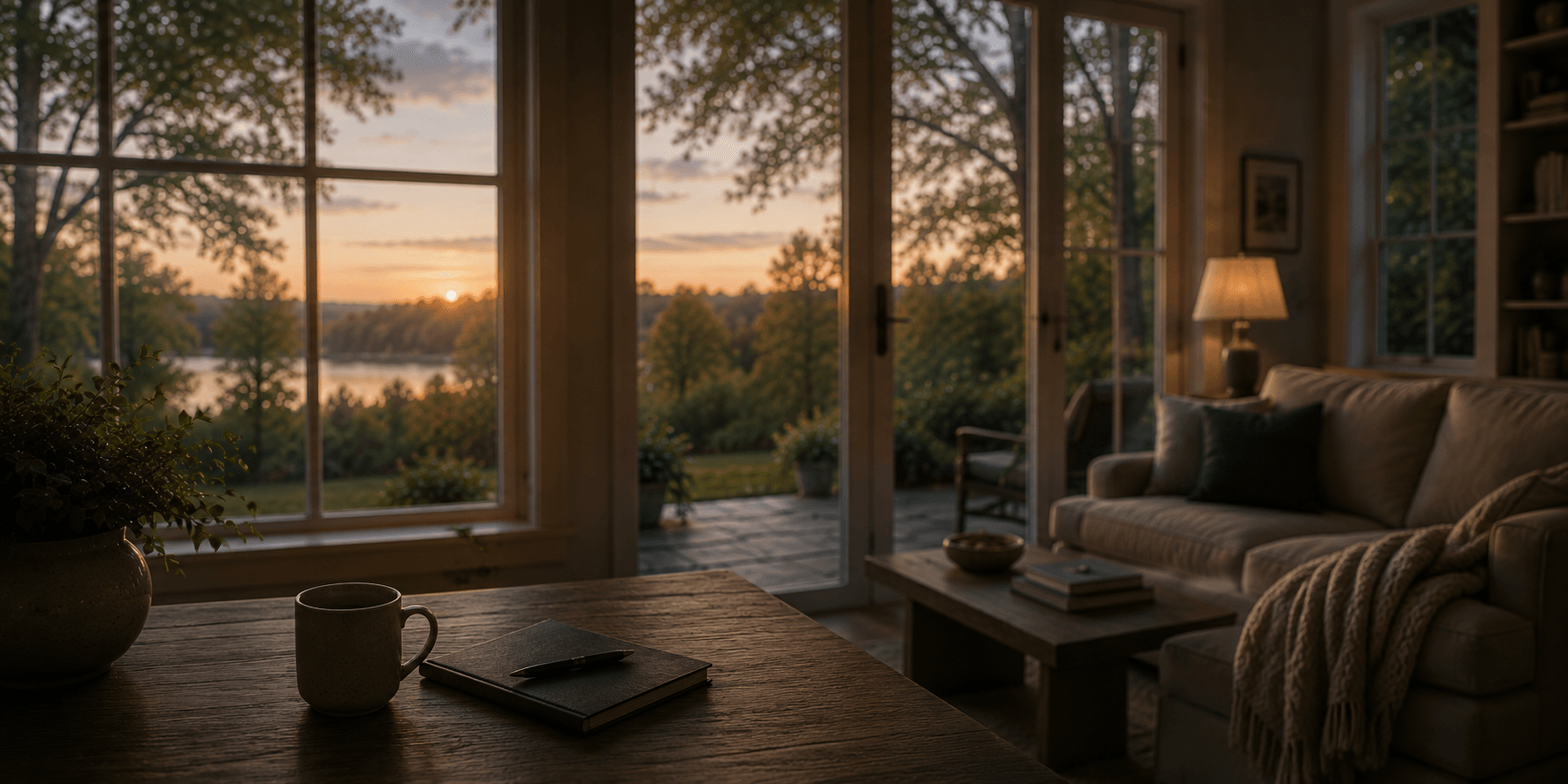
Homeownership was supposed to feel grounding.
For many people, it still does. A home is where routines settle, children grow, meals are repeated, seasons become familiar, and a life gathers its shape.
But somewhere along the way, modern homeownership became more complicated than it needed to be.
The house became fuller of systems. The records became more scattered. The decisions became more technical. The homeowner became the person expected to remember everything: the service visit from three years ago, the warranty tucked into an email, the specialist’s note about a recurring issue, the filter size, the roof age, the irrigation setting, the reason one repair was delayed and another deserved closer attention.
None of this is dramatic enough to be called a crisis. That is part of the problem. The burden of homeownership is often quiet.
It lives in the mental tabs left open.
The Modern Homeowner Is Carrying Too Much
Modern homes are no longer simple structures with a few familiar systems. They are layered environments: climate, plumbing, roofing, drainage, lighting, appliances, exterior materials, landscaping, security, documents, warranties, renovations, service providers, and years of accumulated decisions.
Each part may have its own specialist. Each specialist may understand one part of the home very well. But the homeowner is usually left to connect the larger picture.
That means the homeowner becomes the continuity layer.
They are expected to remember what happened, interpret what matters, decide what can wait, know who to call, preserve the right documents, understand competing recommendations, and keep enough context alive that the next conversation does not begin from scratch.
This is not because homeowners are doing anything wrong. It is because the traditional experience of homeownership was never designed around continuity.
It was designed around transactions.
A repair. A project. A seasonal task. A proposal. A visit. A follow-up. Then another disconnected event months later.
The home keeps accumulating history, but the systems around the home rarely preserve that history in a way the homeowner can use.
Smart Devices Did Not Solve the Real Problem
For years, the future of homeownership was framed as smart devices, connected systems, dashboards, apps, sensors, notifications, and automation.
Some of those tools are useful. A well-placed sensor can provide information. A smart thermostat can make a home more efficient. A device can remind someone that something changed.
But more information is not the same as more understanding.
An alert can tell a homeowner that something happened. It may not explain what it means, what context matters, what happened last time, who worked on the system before, what decision was made, or whether the next step deserves calm observation or professional review.
That gap matters.
The emotional burden of homeownership is not solved by turning the home into another stream of notifications. In many cases, more alerts simply give the homeowner more to interpret.
The goal should not be to make homes feel like machines.
The goal should be to help people feel at home again.
The Missing Layer Is Continuity
A home needs memory.
Not memory in the sentimental sense alone, though that matters too. A home also needs practical memory: service history, documents, photos, prior recommendations, seasonal patterns, open questions, decisions made, and details worth carrying forward.
Continuity changes the experience of ownership because it gives future decisions a place to begin.
Instead of asking, “What was that issue again?” the homeowner can return to a record.
Instead of wondering whether a recommendation has context, the homeowner can see what is known and what remains uncertain.
Instead of starting each project, repair, or seasonal review from zero, the home can carry its own history forward.
This is the difference between a home that constantly demands recall and a home that becomes easier to understand over time.
Continuity does not remove the need for judgment. It supports better judgment.
It does not replace specialists. It helps prepare the homeowner for conversations with them.
It does not promise certainty. It makes uncertainty less disorienting.
What Calmer Homeownership Looks Like
Calmer homeownership is not passive.
It is not ignoring issues, delaying care, or pretending a complex home can run itself. It is also not living under a stream of warnings, checklists, and alerts.
Calmer homeownership looks more like orientation.
It means the homeowner can see the shape of the home more clearly. The important details are preserved. The next step feels understandable. The record is not scattered across drawers, text messages, PDFs, inboxes, and memory. The homeowner does not have to become the operations manager of the house in order to care for it well.
It also means recommendations are held with restraint.
Some things deserve attention. Some things deserve documentation. Some things deserve a specialist. Some things deserve watching over time. A calmer system should help distinguish between those possibilities without turning every unknown into pressure.
This is where stewardship becomes different from maintenance.
Maintenance is often task-based.
Stewardship is care with memory.
It asks: what should be understood, what should be preserved, what should be coordinated, and what should the homeowner be able to carry forward with more confidence?
The Home Should Become Easier to Understand
One of the quiet frustrations of homeownership is that the home is always communicating, but not always clearly.
A recurring sound, a seasonal pattern, a service note, a small repair, a vendor recommendation, a damp area after heavy rain, a system that behaves differently in winter than in summer. Each detail may be small on its own. Together, they become the language of the home.
Your home has always been telling you something. Potomac Lux helps you understand it.
That does not mean every signal is urgent. It does not mean every observation is a diagnosis. It means the home deserves a better record, and the homeowner deserves a calmer way to make sense of that record.
A home that is easier to understand is not simply more efficient.
It is more humane to live with.
How Potomac Lux Thinks About the Future
Potomac Lux exists as an interpretation, memory, and coordination layer for thoughtful homeownership.
It is not a contractor. It is not a marketplace. It is not a smart-home gadget company or an AI dashboard. It does not replace licensed specialists, diagnose conditions, or guarantee outcomes.
Its purpose is different.
Potomac Lux helps homeowners preserve context, organize what matters, prepare for decisions, understand the home over time, and coordinate next steps with care when outside support is appropriate.
The intelligence should be quiet.
The coordination should be thoughtful.
The homeowner should feel more capable, not more managed.
The home should remain the center of the story.
This is the future Potomac Lux is building toward: not louder technology, not more fragmented services, not another layer of complexity, but a calmer operating philosophy for caring for the places people are entrusted with.
The Future Should Help People Feel at Home Again
The best future of homeownership will not be defined by how many devices are connected or how many dashboards a homeowner can open.
It will be defined by whether the home becomes easier to understand.
Whether important details are remembered.
Whether decisions feel calmer.
Whether care can happen with continuity instead of constant reassembly.
Whether the homeowner can remain informed without carrying every detail alone.
Because the point of a home is not to become a machine.
The point of a home is to hold life.
The future of homeownership should honor that. It should help people care for their homes with more clarity, more continuity, and less emotional noise.
It should help people feel at home again.
If you want to help shape a calmer way to care for a home, Potomac Lux is inviting beta homeowners to begin with a private fit conversation.
After reading this article,
ask yourself one question:
If something important happened in your home tomorrow, would you know exactly where to find the history?
Start building your home’s memory today.
START YOUR HOME RECORD →Free to use. Paid projects and hands-on services are priced separately.
Continue Exploring
Related reading for the same homeownership context.
Home operations
The Future of Homeownership Is Continuity
Modern homeowners need memory, context, trusted recommendations, and coordinated next steps, not more scattered tools.
Calm homeownership
A Vision for Calmer Homeownership
A home becomes easier to care for when records, photos, decisions, and trusted recommendations stay connected over time.
Calm homeownership
Why Home Stewardship Creates Calmer Homeownership
A stewardship-first approach helps homeowners reduce uncertainty by preserving records, context, and trusted next steps.